- Home
- Your Government
- Departments
- Public Works
- Central Maintenance Facility Project
Central Maintenance Facility Project
New Central Maintenance Facility Project Taking Shape
The City is considering replacing its Central Maintenance Facility at 8168 Barbara Avenue with a new building sized to meet the community’s growing needs. The current facility, built in 1985, serves as home base for the City’s Streets, Fleet, Parks, and Utilities divisions, including approximately 37 full-time and 24 seasonal/part-time staff who maintain and repair the City’s critical infrastructure. With significantly more water and sewer lines, miles of roadway and acres of park to maintain today, these operations have more than outgrown the existing facility.
Land Purchase
In 2021, the City purchased a four-acre parcel of land immediately south of the current Central Maintenance Facility to provide room for expansion, while keeping the facility adjacent to the rest of the municipal campus, which includes City Hall, the Inver Grove Heights Police Station and Veterans Memorial Community Center.
Needs Analysis
After completing a professional needs analysis and site plan in 2024, the City Council recently hired Wold Architects to design a new Central Maintenance Facility that will provide a safer and more efficient workspace for City staff, particularly in the fleet maintenance area, as well as improved storage and security for City vehicles, attachments and tools. After blueprints are approved, the City anticipates that construction will begin in May 2026, with a tentative completion date of December 2027.
Funding: Public Hearing on Bond Capital Improvement Plan
The proposed project is expected to be financed by the City selling general obligation bonds, which would be paid back over time with property tax revenues. In accordance with state law, the City Council held a public hearing on the related Bond Capital Improvement Plan as part of their meeting on Monday, Jul. 28.
View a presentation given at the Bond Capital Improvement Plan Public Hearing (PDF).
Why does the City need a new Central Maintenance Facility?
Put simply, the existing facility is just too small. It was built in 1984, when Inver Grove Heights was a much smaller community, with fewer staff, a smaller fleet of vehicles, and less infrastructure to maintain.
Population of Inver Grove Heights
| Year | Population |
|---|---|
| 1985 | 20,000 (estimated) |
| 2025 | 36,596 |
| 2050 | 42,500 (projected) |
A recently completed needs analysis found that the current facility is only 45% of the total size needed for current operations to function properly. The mechanic bays and vehicle maintenance areas within the building are even more undersized, coming in at only 25% of the size needed to safely and efficiently maintain the City’s fleet of squad cars, fire trucks, snow plows and other vehicles.
Maintenance Operations - 1985 vs. 2025
| Description | 1985 | 2025 |
|---|---|---|
| Full-Time Employees | 14 | 37 |
| Seasonal / Part-Time Employees | 6 | 24 |
| Vehicles stored at Central Maintenance Facility | 24 | 72 |
| Equipment stored at Central Maintenance Facility (trailers, mowers, etc.) | N/A | 50 |
In addition to a severe lack of space, the existing building also lacks certain features that are generally accepted, and could be legally required, in a modern public building. For example, there is no women’s locker room to serve female employees, and the building lacks key features necessary to comply with the Americans with Disabilities Act (ADA), such as hallways wide enough for a wheelchair or an elevator to reach the second floor.
Lastly, the existing salt storage building is also undersized, but perhaps more importantly, it has a roof too low to allow for trucks to be loaded and unloaded inside. This results in staff having to handle materials like road salt more than once, and increasing the likelihood of salts getting into the stormwater system and adjacent water bodies.
How big does the building need to be?
The proposed new building is in the early stages of architectural design, so the exact square footage is still to be determined.
Divisions based out of the Central Maintenance Facility include Parks, Streets, Utilities and Fleet Maintenance. There are currently 37 full-time, year-round staff in these areas, plus another 24 seasonal employees at certain times of the year, for a total of 61 current employees. Any new building would be sized to support these existing employees, plus estimated workforce growth resulting from continued population growth and development within the City limits. Additionally, as regulations and public demand evolve, it is anticipated that the City may need to add a Natural Resources Division in the coming years.
The proposed new building is being designed to provide sufficient office spaces, work rooms, meeting rooms and locker rooms for this current and future workforce. The space study that was part of the Space Needs Study also identifies a need for a multi-purpose meeting room of 1,500 to 2,000 square feet, which could accommodate anywhere from 50 to 90 people, for staff trainings, lunch breaks, etc.
What will the new building look like?
That is yet to be determined. The City recently hired Wold Architects & Engineers to begin a detailed design of the proposed building, but that work is not yet complete and no images of the proposed building have been developed yet.
Where will the proposed building be built?
The proposed building would be built on the current City campus south of 80th Street, in the area of Barbara Avenue and Babcock Trail. In 2021, the City purchased the property immediately to the south of the current Central Maintenance Facility, to provide sufficient land for a future maintenance facility expansion. To view an Insights newsletter article that contains a map of this area, click here (PDF).
Can the existing building still be used in some way?
The City did study adding on to the existing building in order to meet the identified needs in 2015, and again in 2024 with the Space Needs Study and Facility Master Plan, but opted not to pursue this option through to final design due to several drawbacks:
The City did study adding on to the existing building in order to meet the identified needs in 2015, and again in 2024 with the Space Needs Study and Facility Master Plan, but opted not to pursue this option through to final design due to several drawbacks:
- Existing operations would have to be relocated to a leased space to allow for construction.
- Construction would take longer, thereby adding additional costs.
- There are significant challenges with grading the site to extend the facility onto the land acquired to the south.
- There are challenges with making the existing spaces ADA compliant.
- There would be a need for a full HVAC system replacement if any of the existing space was going to continue to be used for anything other than cold storage.
In the Option that has been advanced to the design phase, the main existing building is proposed to be retained and used for cold storage. The existing cold storage building / salt storage shed is proposed to be demolished to make way for a new building and allow for proper site layout, grading, and circulation.
What will the proposed project cost and how will it be paid for?
As the building is not yet designed or bid, the exact cost to prepare the site and construct the building is not yet known. However, it is estimated to cost between $50,850,000 and $58,000,000. That is undoubtedly a large amount of money, and care is being taken in the design of the building to minimize the cost, while still meeting the needs now and into the future.
The City has limited funding options available to it, as state and federal funding is generally not available for this type of facility, and cities in Minnesota are generally restricted to property taxes as the source of funding for general purpose expenses such as this. Therefore, the project is proposed to be funded largely through the issuance of tax-exempt bonds, which would be paid back over time with property tax revenues. The City may be able to use some cash on hand to cover a portion of the cost of the project, similar to a downpayment on a house, which would reduce the amount of debt that has to be taken on. However, the City does not have cash on hand to cover the entire estimated cost of the proposed project.
Will the proposed project increase property taxes, and if so, by how much?
The proposed project is expected to impact property taxes, although the exact dollar amount is not yet known. The Bond Capital Improvement Plan adopted by the City Council on Jul. 28, 2025, sets a maximum borrowing amount of $58,000,000, but the actual amount could be smaller.
The total property tax bill a resident or business pays is composed of taxes levied by the city, county, school district and a few special taxing districts. This project would impact only the city portion of the bill, so it should not be assumed that the overall property tax bill will change by any certain percent.
The City’s financial advisor has prepared an estimated impact to the property taxes of three sample properties, based on three possible borrowing amounts, as shown below:
Estimated Property Tax Increase Due to Borrowing for New Central Maintenance Facility - Annual Amount
| Type of Property | Tax Increase on $50,850,000 Borrowed | Tax Increase on $56,220,000 Borrowed | Tax Increase on $58,000,000 Borrowed |
|---|---|---|---|
| Median Value Residential Property ($362,200) | $252.49 | $279.38 | $287.01 |
| $400,000 Commercial Property | $334.90 | $370.57 | $380.76 |
| $400,000 Agriculture Property | $175.42 | $194.11 | $199.44 |
The actual amount that needs to be borrowed by the City to fund the project will be determined by the final design of the building, the construction bids received and future Council decisions about what combination of cash versus borrowing to use for the project. (NOTE: The City does not have the ability to pay cash for the entire project, or even a majority of the cost, but does have funds for a “downpayment” similar to what a private resident might put down on the purchase of a home.)
Additionally, it is estimated that the City would issue bonds for the project over two years – thereby making the property tax increase more gradual. For example, with the mid-range scenario above, a median value residential property might see an increase of $139.69 in the first year and an additional $139.69 in the second year, and then no additional change due to this project for the term of the bonds, which is estimated at 20 years.
Has a final decision been made to build a new Central Maintenance Facility?
No. The City Council first ordered a Space Needs Study and Facility Master Plan, and then advanced the project into the design phase, but there are numerous additional steps to be taken before the Council would take a vote on whether or not to proceed to construction. Design of the building is expected to continue throughout the fall of 2025, with a final design brought before the City Council in December of 2025. If the project proceeds, it is anticipated that construction bids would be sought in the first quarter of 2026.
Why didn’t a project this big get taken to a resident vote to begin with?
State law doesn't allow cities like IGH to call a vote or referendum at its discretion. The City can only hold a referendum on things that state law requires us to.
To borrow money for the construction of a "general government building," we are only required to hold a referendum in response to a valid petition. If the City was considering borrowing for a recreational facility (community center, ice arena, pool, etc.), then state law would require us to hold a vote up front before any steps are taken to borrow money for that purpose. But for "general government buildings," like City Halls, police and fire stations, maintenance facilities, etc., the only way there is a resident vote is if one is triggered by a valid petition.
New Central Maintenance Facility Working Timeline
Dates are subject to change.
- March 2024: City Council awards contract to Wold Architects & Engineers for Central Maintenance Facility needs analysis and site plan development.
- February 2025: Draft report of needs analysis and site plan presented to City Council at City Council meeting.
- April 2025: City Council accepts Central Maintenance Facility space needs study and facility site plan.
- June 2025: City Council hires Wold Architects for architect services and Kraus-Anderson for construction management services for proposed new Central Maintenance Facility.
- Monday, July 28, 2025 at 6 p.m.: The City holds a public hearing on the proposed new Central Maintenance Facility as part of a regular City Council meeting held in IGH Council Chambers.
- August 2025: Schematic design review and approval by City Council.
- November 2025: Final design review and approval by City Council.
- February/March 2026: Construction drawing and specification completion; project advertised for bid with help from Kraus-Anderson.
- May 2026: Proposed start of construction of new Central Maintenance Facility.
- December 2027: Proposed completion of construction and occupancy.
To read the Central Maintenance Facility Space Needs Study and Facility Master Plan, click here (PDF).
To read a front-page Insights newsletter article on the Central Maintenance Facility project, click here (PDF).
To read a fall 2025 update on the project from the Insights newsletter, click here.
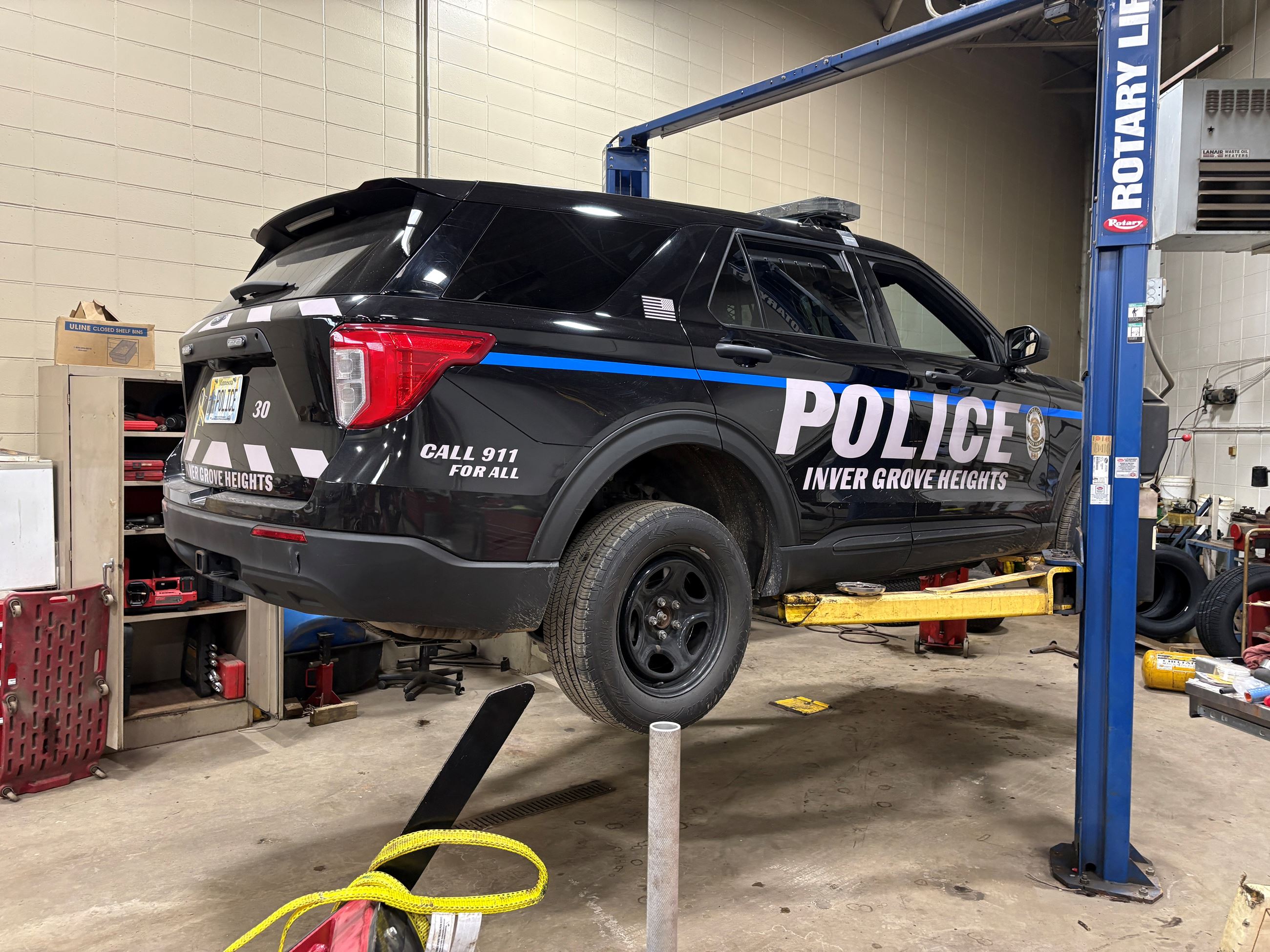
View additional photos of the existing Central Maintenance Facility in the Photo Gallery.